

The Wars of the Future Will Not Begin on the Frontline
Why Europe Needs to Focus on Corporate Cybersecurity Alongside Military Investments
Europe has gradually come to recognize that the continent’s security landscape has fundamentally changed in recent years. Rising geopolitical tensions, lessons from the Russia–Ukraine war, and the launch of large-scale military modernization programs all signal that traditional defense has returned to the top of political priorities. Yet, while European countries purchase brand-new tanks, air defense systems, and drones, one area of preparedness remains alarmingly underdeveloped: corporate cybersecurity, especially in critical infrastructure sectors
By nature, modern conflicts are no longer just clashes between soldiers and military technology. The frontlines now extend into cyberspace, where invisible attackers aim to disrupt operations, steal data, and disable systems; often months or even years before any physical aggression occurs. What makes this particularly dangerous is that the primary targets are often not military facilities, but civilian companies that keep the economy running.
Companies Will Be Primary Targets in Future Conflicts
A future conflict is unlikely to start with tanks and missiles. Rather, it would be initiated by:
- mapping and compromising the systems of energy providers,
- manipulating data across logistics networks,
- disrupting banking systems,
- or even sabotaging industrial control systems (ICS/SCADA).
By attacking, the goal is not necessarily permanent destruction, but temporary economic paralysis, which can trigger severe social and political instability. A country’s wartime capabilities depend not only on the strength of its armed forces but also on the functionality of its economy: whether electricity flows, communications operate, and food and medicine reach the population.
In effect, companies, regardless of whether they manage critical infrastructure, have de facto become part of national security.
The Vulnerability of Critical Infrastructure Goes Beyond Technology
Energy and water utilities, transportation networks, healthcare institutions, and financial services have always been high-value targets. However, in the 21st century, these systems have become deeply interconnected, which increases efficiency but also multiplies vulnerability.
A single, well-directed attack can:
- shut down an electrical substation,
- disrupt electricity, gas, or water supply,
- or create serious chaos in air traffic management.
Such events not only inflict economic damage but also profoundly undermine the public’s perception of security; precisely what attackers aim to achieve.
Moreover, much of the critical infrastructure still relies on legacy IT and OT systems not originally designed for internet connectivity or remote access. Rapid digitalization has inevitably exposed these systems to the risks of cyberspace.
It’s Not Only Critical Companies That Are at Risk
Attackers do not need to target the most important systems directly. It is often easier to:
- exploit weaknesses through suppliers,
- target logistics companies,
- or compromise SMEs connected to critical service providers.
Supply chain attacks are now among the most common methods. A single weak link allows attackers to penetrate deeper than anyone would like. It is therefore mistaken to assume, “We won’t be attacked because we aren’t critical infrastructure.” Most companies, often unknowingly, are strategically significant nodes in the cyber landscape.
Military Investments Alone Are Not Enough
Europe may spend more and more on modern military technology, but if the companies that underpin the economy are unprepared, national defense remains incomplete. A country cannot fight effectively if:
- factories halt production,
- logistics networks are paralyzed,
- banks are rendered inoperable,
- or energy supply is disrupted.
This is an asynchronous war environment, where attackers can cause damage faster and cheaper than defenders can repair it. Physical infrastructure restoration may take months or years even, while cyberattacks can occur in minutes.
This is why, alongside military modernization, Europe must focus on:
- strengthening digital resilience in the corporate sector,
- raising regulated minimum cybersecurity standards,
- supporting SMEs in building defensive capabilities,
- and developing new state–market cooperation models.
The EU NIS2 directive is a step in the right direction, yet its implementation varies by member state, and for many companies, it still feels like an administrative burden. In reality, this is not about paperwork, it is about survival.
Analysts’ Logic Is Clear: War Targets the Economy First
Given the current geopolitical situation, experts broadly agree that a modern conflict:
- Begins with cyber espionage, potentially lasting months or years,
- Continues with coordinated cyberattacks targeting the economy,
- And only then, if at all, proceeds to physical aggression.
This is not theoretical threat: in recent years, numerous examples have shown state or state-backed actors targeting companies for political or strategic purposes: consider attacks on Ukraine’s energy grid, the Colonial Pipeline incident, or increasingly frequent supply chain operations.
The lesson is clear: the economy is the new frontline of war, and corporate cybersecurity is no longer just an IT concern, it is a matter of national security.
What should Europe and Its Companies Do?
- Cooperation at the National Level
States need to establish rapid-response centers, that support companies, share information, and provide unified guidance for managing attacks.
- Companies Must Adopt ,,Continuous Defense” Approach
Cybersecurity is not a project or a task to complete; it is an ongoing operational philosophy. This includes:
- Zero Trust architecture,
- Automated threat detection,
- Regular vulnerability assessments,
- Continuous employee education.
- Automation Is Key to Survival
The speed and complexity of attacks now exceed human capacity. Modern companies need AI-based and automated tools to detect and mitigate threats in real time.
- True Cyber Resilience Cannot Be Achieved Without Supporting SMEs
SMEs are the most vulnerable in the supply chain, still they have the fewest resources for cybersecurity. If they fail, large companies are also at risk.
Conclusion: Europe’s Security Depends on Its Corporate Servers
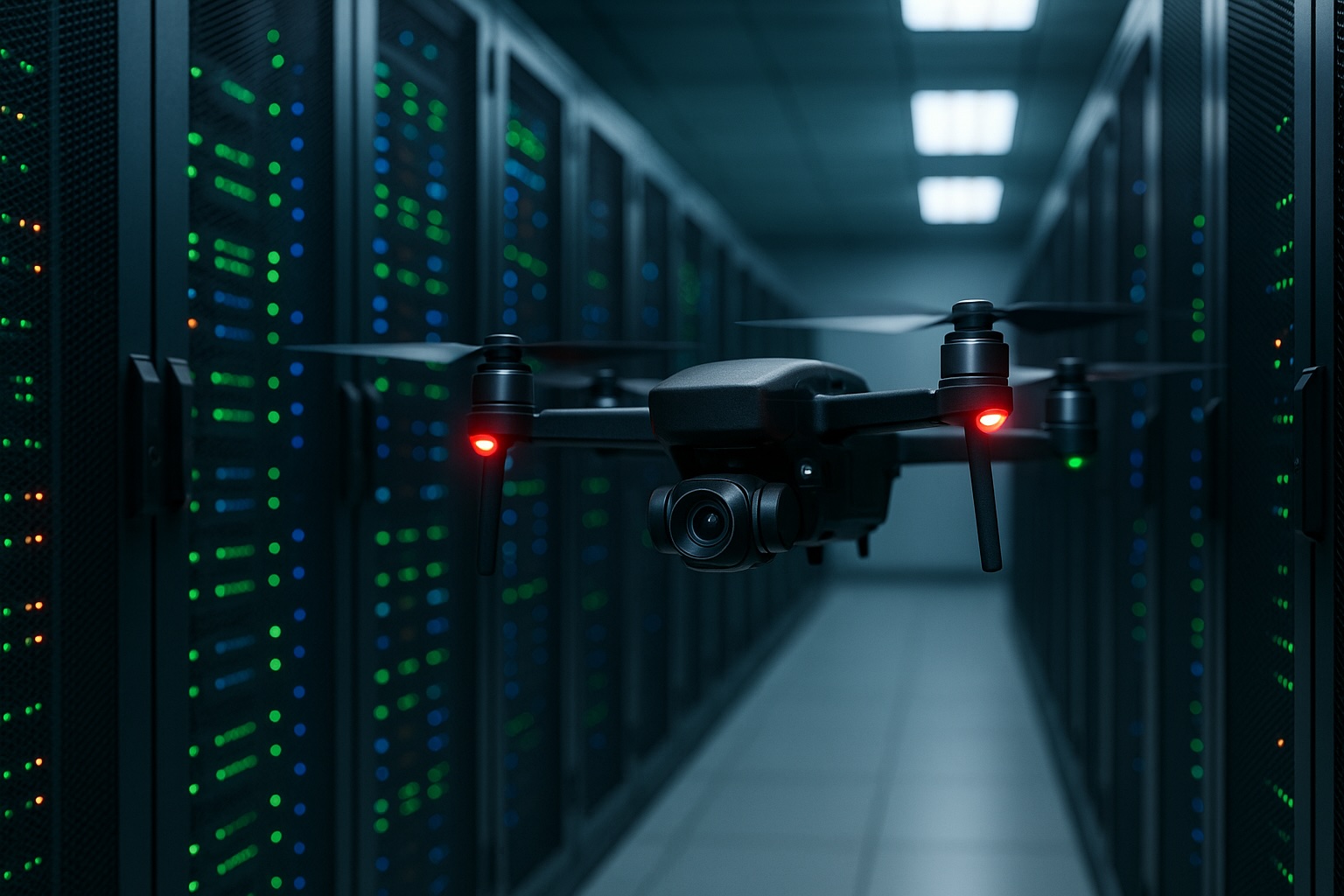
The wars of the future will not only take place at borders. They will unfold in data centers, cloud platforms, and network devices. Europe may invest billions in military modernization, but if its companies are unprepared for conflicts in cyberspace, the continent remains vulnerable.
Defense today is no longer the sole responsibility of the military; it includes every company that contributes to the functioning of society. In this sense, the cybersecurity sector is increasingly part of the defense industry.
The question is therefore not whether Europe can afford to strengthen corporate cybersecurity, but whether we can afford to leave it unaddressed.
Other News and Events from ViVeTech

What Is Indirect Prompt Injection? How Attackers Hijack AI Agents Through Web Content and Emails
Learn more
További híreink és eseményeink
Mi az az indirekt prompt injection? Így térítik el az AI ágenseket a webes tartalmakon és e-maileken keresztül
Olvasson tovább
Hírlevél feliratkozás

Sign up for our newsletter