

EHS and Compliance in Industrial and Logistics Environments: What AI Sees That Humans Miss

In industrial and logistics settings, EHS (Environment, Health & Safety) and compliance have long been regarded as "check-the-box" domains. Mandatory training, documented rules, and process descriptions meticulously prepared for audits. On paper, everything is in order. In reality, however, the same accidents occur, the same "near-miss" events repeat, and chronic health issues resurface time and again.
This is one of the greatest paradoxes of EHS: increasing regulation does not necessarily lead to a proportional decrease in risk. This is not because the rules are flawed, but because the environment in which they must be applied changes much faster than human attention or manual inspection can track.
Within this tension, a new tool emerges: AI-powered computer vision. Not as a surveillance technology, but as a process analysis and risk perception layer that can elevate EHS and compliance to an entirely new level.
The Real Risk Landscape of Industry and Logistics
A production hall or a logistics center is fundamentally different from an office environment. We are not talking about static workstations, but continuous motion. People, forklifts, autonomous vehicles, pallets, temporary storage, shifting routes, and constant shift changes define the day-to-day.
In this environment, EHS risk is not a fixed state, but a dynamic map that transforms minute by minute. What was safe in the morning can become hazardous by the afternoon due to a reorganized workflow or a temporary workaround.
Traditional EHS tools - checklists, periodic walk-throughs, manual observation - start at a disadvantage. They rely on human attention in an environment where attention is not scalable, and where critical situations often occur exactly when no one is looking.
Why Traditional Compliance Logic Fails
Compliance is traditionally built on "post-mortem" logic. We document that the training took place. We record that the regulation exists. We verify that the audit happened. However, this is not the same as ensuring that rules are actually upheld during real-world operations.
After an accident or incident, the questions are almost always the same:
- Who was there?
- Were the regulations followed?
- Was the proper PPE (Personal Protective Equipment) being used?
The answers are often uncertain- It's built on subjective accounts, fragmented information, and retrospective reconstruction. At this point, compliance is no longer preventing; it is merely explaining.
This is where AI-powered video analytics changes the game.
The Camera as a Sensor, Not a Spy
It is vital to distinguish between "surveillance" and "interpretation." Traditional camera systems record. If something goes wrong, the footage can be reviewed. While this has value, it is fundamentally reactive.
AI-powered image analysis, by contrast, does not primarily look back; it recognizes. It does not search for faces; it looks for patterns. It does not evaluate individuals; it evaluates situations. In this approach, the camera becomes a sensor that continuously analyzes the environment and signals when risk levels rise.
This shift is crucial for EHS. The focus moves from post-incident management to proactive prevention.
What can AI-powered video analytics achieve for EHS today?
In practice, AI can automatically identify numerous situations that were previously left to human observation or pure chance: verifying the use of protective equipment (PPE), detecting entry into restricted zones, or identifying dangerous proximity between humans and machinery.
A particularly high value lies in detecting "near-miss" events. These are situations where an accident almost happened but was narrowly avoided. Traditionally, these are rarely documented, yet statistically, they are the most accurate predictors of future severe incidents. AI can recognize and aggregate these patterns. As a result, EHS no longer merely reacts to isolated incidents, but identifies trends, enabling intervention before a problem occurs.
Ergonomics: The Invisible EHS Risk
While accidents are dramatic and trigger immediate reactions, ergonomic issues are much quieter. Poor posture, repetitive motions, asymmetrical loading, and improper lifting techniques rarely cause an immediate incident, but lead to serious long-term health damage.
Musculoskeletal disorders (MSDs), chronic pain, and gradual performance decline represent one of the largest hidden costs in industrial and logistics environments. Furthermore, in these cases, it is often difficult to pinpoint exactly where and when the problem originated.
Computer Vision and AI in Ergonomic Analysis
AI-powered analysis opens new doors in this area as well. The technology can analyze movement patterns: postures, joint angles, lifting positions, repetitive cycles, and static loads.
This is not a one-time assessment; it is continuous monitoring. It does not rely on the periodic presence of an ergonomist, but on real data showing where strain accumulates over time. Ergonomics thus moves from a "nice-to-have" category into a measurable, analyzable operational factor.
It is important to emphasize that this is not about individual performance evaluation. The focus is not on who is working 'poorly,' but on identifying which workflows and workstations carry structural risks.
Health Preservation and Efficiency: Two Sides of the Same Coin
For a long time, ergonomics was seen purely as a health and safety issue. In reality, it is inextricably linked to efficiency. Poorly designed movement patterns not only lead to injury but result in slower, less precise, and more fatiguing work.
AI-driven analysis allows for the optimization of workflows to result in more natural movement, lower strain, and more balanced performance. This translates to less downtime, lower turnover, and more stable capacity planning.
In this light, EHS is no longer a cost, but an investment in operational stability.
Compliance Reimagined: Provable Prevention
AI video processing also transforms the logic of compliance. The emphasis shifts from "after-the-fact" compliance to continuous provability. You no longer prove that a training session occurred; you prove that the risk level was actually reduced.
Time-stamped, objective data becomes available on how the system functions daily. This provides a robust defense during audits, regulatory inspections, and legal situations, while making the organization's internal operations more transparent.
Privacy and Ethics: Right Questions, Wrong Focus
Naturally, such a system raises privacy and ethical questions. These cannot and should not be bypassed. However, the key is proper framing: AI is used for process security and risk mitigation, not identification or discipline.
With proper anonymization, purpose-bound data management, and transparent communication, these systems do not erode trust, they strengthen it. They make it clear that the goal is the protection of employees and the stability of the operation.
Conclusion: EHS as a Predictive System
EHS challenges in industrial and logistics environments will not diminish. Systems are becoming more complex, the workforce more heterogeneous, and regulatory expectations more stringent. In this milieu, EHS cannot remain an administrative function.
AI-powered computer vision enables EHS to become a predictive, data-driven, and truly preventive system. It is a tool that not only reduces the number of accidents but contributes to long-term health preservation and more efficient operations.
Not because it sees everything.
But because it finally sees what was previously hidden.
Other News and Events from ViVeTech

What Is Indirect Prompt Injection? How Attackers Hijack AI Agents Through Web Content and Emails
Learn more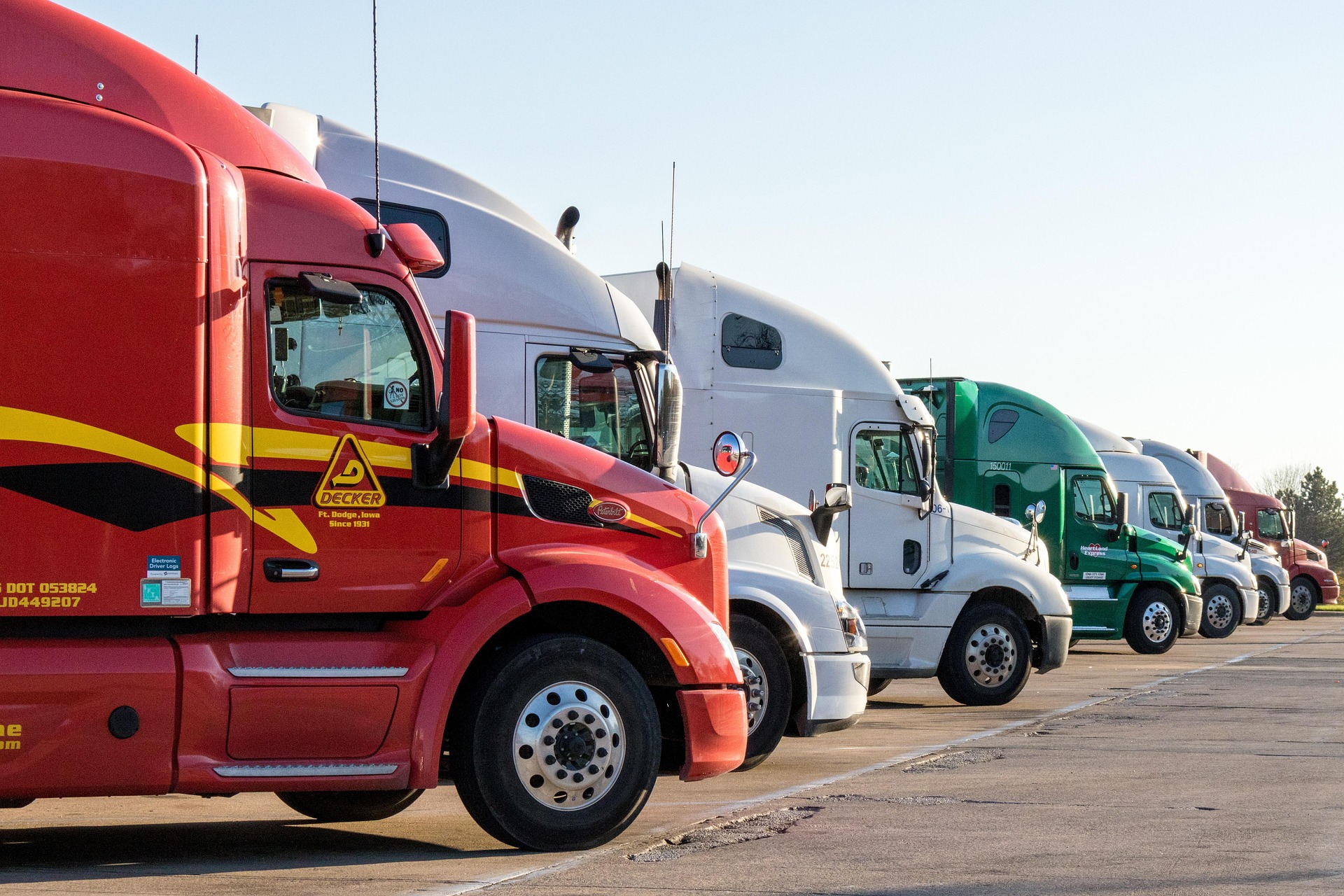
További híreink és eseményeink
Mi az az indirekt prompt injection? Így térítik el az AI ágenseket a webes tartalmakon és e-maileken keresztül
Olvasson tovább
Hírlevél feliratkozás

Sign up for our newsletter